Neurodivergent-led assistive technology from the UK
Sensory Shuttle
Identify sensory triggers. Alert support. Restore calm.
A handheld sensory-support device being developed by a proudly neurodivergent team at Sensory Electronics Limited for people who may find it difficult to communicate sensory discomfort, recognise environmental triggers, or ask for support in the moment.
The Sensory Shuttle is in prototype development. It is not currently available for sale and is not presented as a medical device.
A calmer way to support sensory regulation
Sensory processing differences can make ordinary places feel difficult: lighting, temperature, noise, crowded spaces and unpredictable movement can all matter. When discomfort is hard to explain, distress may be misunderstood as behaviour rather than a request for support. The Sensory Shuttle is being developed as a low-burden, person-led way to make those needs easier to express.
For the person
Simple controls and sensory scenes are intended to help someone express basic needs, engage with calming interaction like a handheld sensory room, learn what may trigger sensory dysregulation, and alert a supporter with environmental details and location using a single button press.
For carers and staff
The device is being designed to give staff and families peace of mind, making it easier to support independence while knowing the user can contact someone quickly if help is needed.
For different settings
Prototype work is considering home, education, care and community settings where sensory overload or communication difficulty may be part of everyday life.
Simple on-device interaction
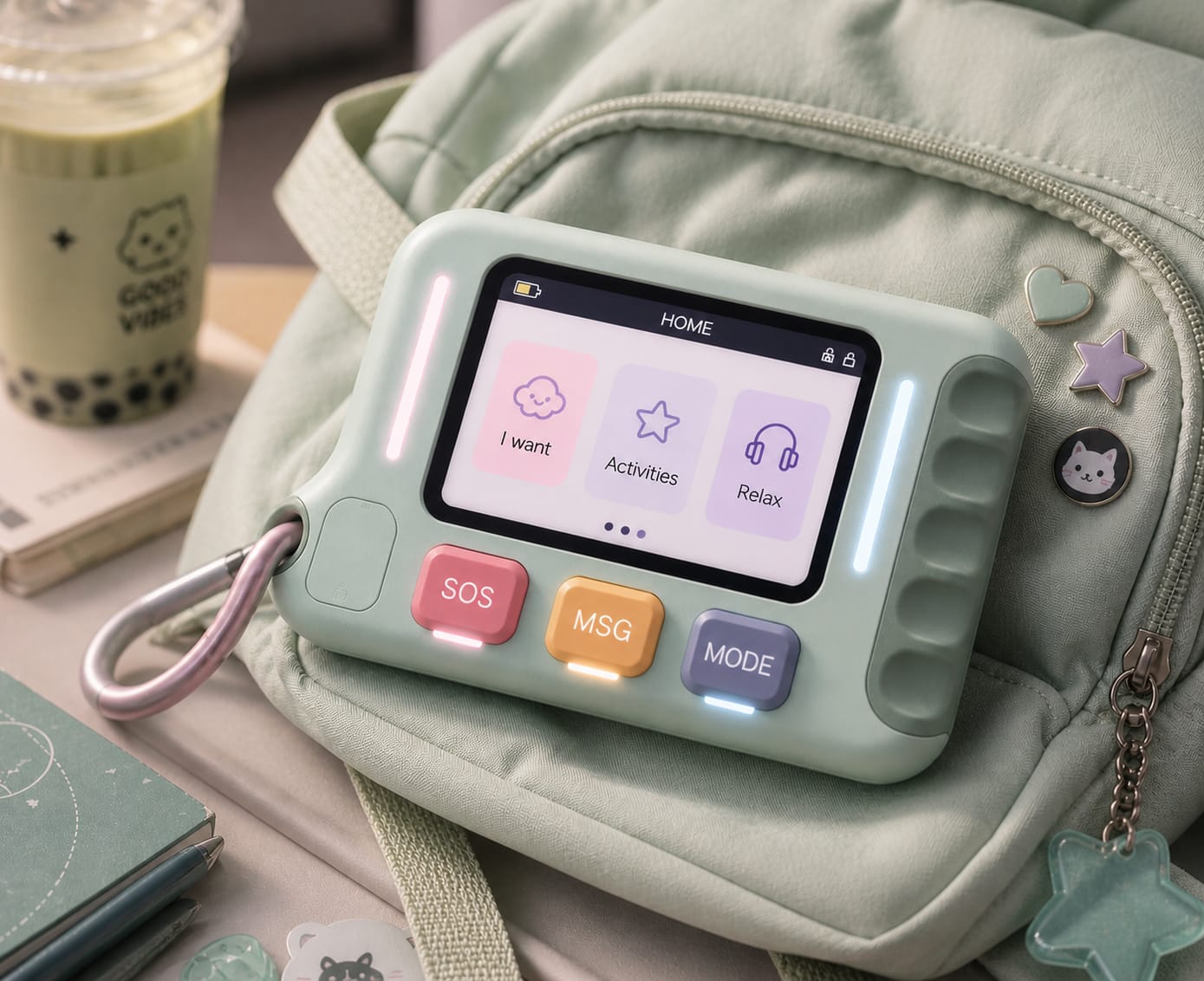
The interface direction is deliberately calm: a small screen, clear status information and large physical controls. The example below is an early public-safe concept rather than a final software screenshot.
Early interface concept showing simple button-led interaction. Final screens may change during prototype development.
Prototype status
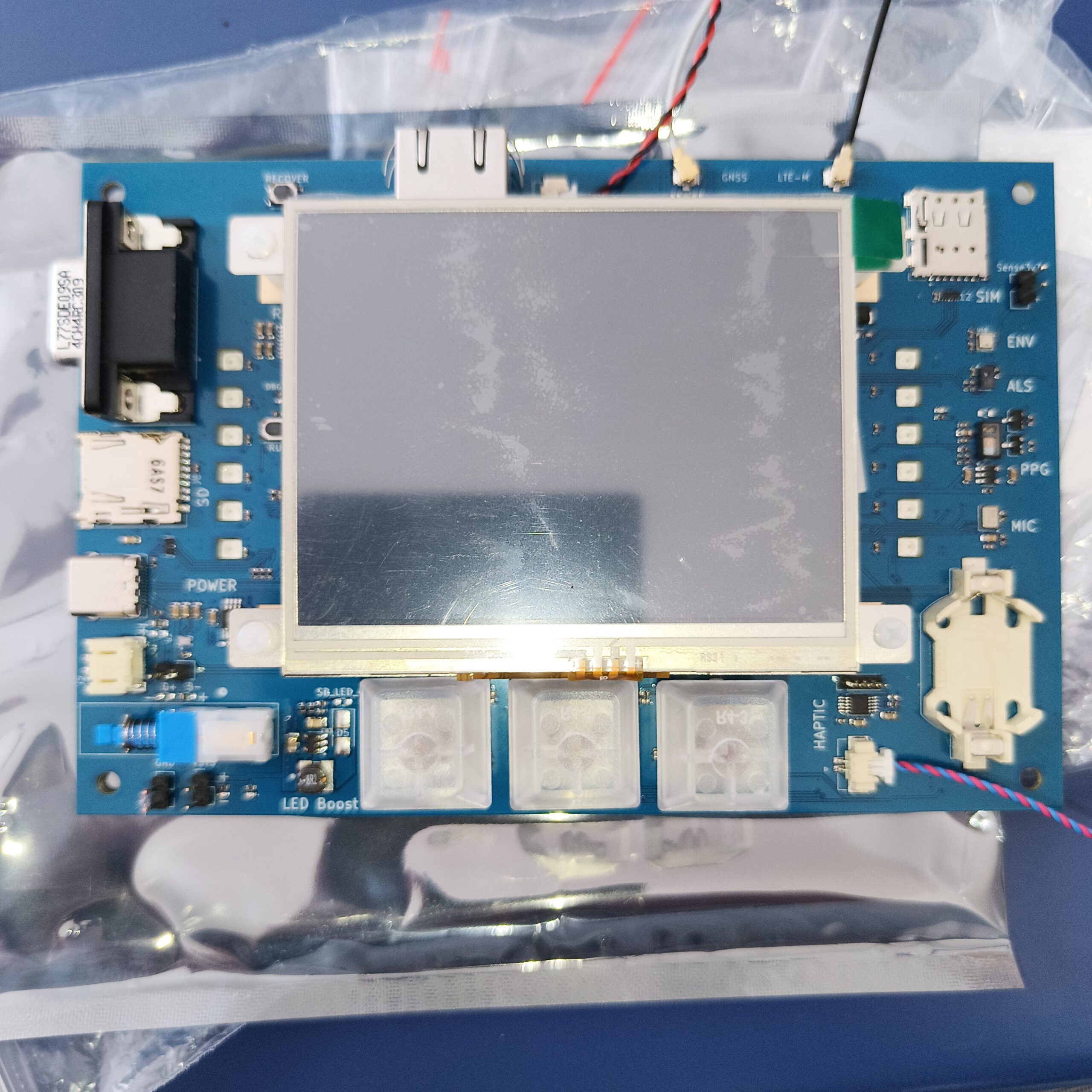
Current development is focused on the electronics, firmware, enclosure design, on-device interface and support software. The prototype board shown is a development unit and does not represent the final consumer enclosure. The next development stage is intended to move from a working prototype towards a more realistic device for supervised user feedback.
Design principles
Low cognitive load
- Large targets
- Plain language
- Minimal menus
Emotionally legible
- Calm visual states
- Gentle lighting
- Clear message and support-request behaviours
Practical support
- Designed for everyday settings
- Useful to carers and staff
- Built around accessibility and reliability
Prototype specification
The final consumer specification is still being developed, but the current prototype direction is clear enough to share.
- Control systemRaspberry Pi RP2350-class microcontroller platform, selected for reliable embedded control rather than phone-style complexity.
- Display and controlsSmall colour screen, resistive touch support and large physical buttons for simple, reliable interaction.
- Sensory feedbackSide lighting, audio and haptic feedback designed to work together as calm, structured sensory scenes.
- Environmental sensingPrototype sensor set focused on light, room conditions, movement and privacy-conscious sound context.
- Remote alertingMobile-network alerting with location snapshot where available, so a user can request support with one button.
- Local filesPrototype work includes microSD, local logs, configuration and scene/media storage for future supervised use.
- Memory directionEngineering work is currently evaluating an 8MB RAM / 8MB flash direction for the next prototype revision.
- Power designBattery-first power management, battery reporting and low-power states are part of the prototype firmware path.
- Future access optionsA future gesture-sensor option is being considered as an accessible communication tool, allowing a person to trigger limited words or phrases without relying only on buttons or touch.
- Robust enclosureCurrent design work is moving towards a purpose-built handheld enclosure rather than a phone or watch format.
Register interest
Sensory Electronics Limited is currently developing the Sensory Shuttle prototype and speaking with potential users, carers, educators, researchers and organisations who may be interested in future supervised feedback, collaboration or partnership.
Prefer to speak to someone? Call 0204 628 1897.